
Case study15 min read
Digital Revolution on JR Railways – SIM-ON and STAGES Pilot at Mojiko Station
Japanese Railways (JR) is one of the largest railway networks in the world, with a rich history and a huge operational scale. In 2020, the company decided to move into digital transformation (DX) in the area of infrastructure management.

Introduction – Japanese Railways (JR) and the Scaling Potential
Japanese Railways (JR) is one of the largest railway networks in the world, with a rich history and a huge operational scale. JR Kyushu (part of the JR Group) was created after the privatization of the national railways JNR in 1987 and today operates 571 stations on the island of Kyushu, transporting hundreds of millions of passengers every year. Many of these facilities are not only transport hubs, but also architectural landmarks. A good example is Mojikō Station in Kitakyushu – a historic neo-Renaissance station building completed in 1914 and listed as an Important Cultural Property in Japan. The station underwent a major renovation completed in 2019, restoring its original character and appearance.
Managing such an extensive infrastructure that combines modern lines (including high-speed Shinkansen services) with historic buildings is a major challenge. Maintaining the facilities requires continuous technical monitoring, regular inspection planning, and efficient integration of data coming from different building automation systems (BMS).
The scale of the JR network – hundreds of stations and thousands of kilometers of track – means that any process improvement can translate into huge benefits. That is why JR is actively looking for innovative solutions that can be scaled across the network. In 2020, the company decided to move into digital transformation (DX) in the area of infrastructure management, starting a collaboration with the Polish company SIMLAB and the Japanese partner Nohara Group.
Beginning of the Collaboration – Nohara’s Role and Implementation Stages (Since 2020)
The partnership between SIMLAB and JR (delivered locally with Nohara Group) began in 2020 with extensive consulting. Nohara Group – a respected integrator of building technologies in Japan – played the role of local expert and implementation partner. With its experience in BIM and digital twins (among other things, Nohara is an official Matterport reseller in Japan), the company introduced SIMLAB solutions to the Japanese market.
In the first phase, a needs analysis and consulting stage was carried out – Nohara and SIMLAB specialists examined JR’s existing infrastructure maintenance processes and identified the areas that would benefit the most from digitalization.
Next came the facility scanning stage – using Matterport technology, 3D scans of selected station areas were made. For example, the passenger hall of Mojikō Station was scanned in about 30 minutes (40 scan points), and the complete 3D space was generated in around 3.5 hours. The process took place outside peak hours, without disrupting station operations, which clearly demonstrated the advantage of this non-invasive method of data capture.
The third stage was the actual implementation of SIMLAB solutions. It included the configuration of two key platforms: SIM-ON (for digital infrastructure and facility management) and STAGES (for monitoring renovation projects and new construction). Nohara played a crucial role as integrator – it adapted the systems to JR’s requirements, connected them to existing data sources and trained staff.
The entire initiative was divided into phases, following the Japanese approach to innovation: first a pilot project, and if successful – scaling to further sites. The pilot was implemented at the historic Mojikō Station.
Pilot at Mojikō Station – Digital Twins, SIM-ON and STAGES in Action
The Mojikō Station Passenger Hall became the testbed for deploying SIMLAB platforms in the reality of Japanese railways. The choice of this facility was no accident – its heritage status meant it required special care and protection, while at the same time it posed a daily maintenance challenge. The goal of the pilot was to show how digital twins and integrated tools would improve both conservation of the historic building and planning of possible construction works.
Digital Twin of the Station (Matterport Scanning)
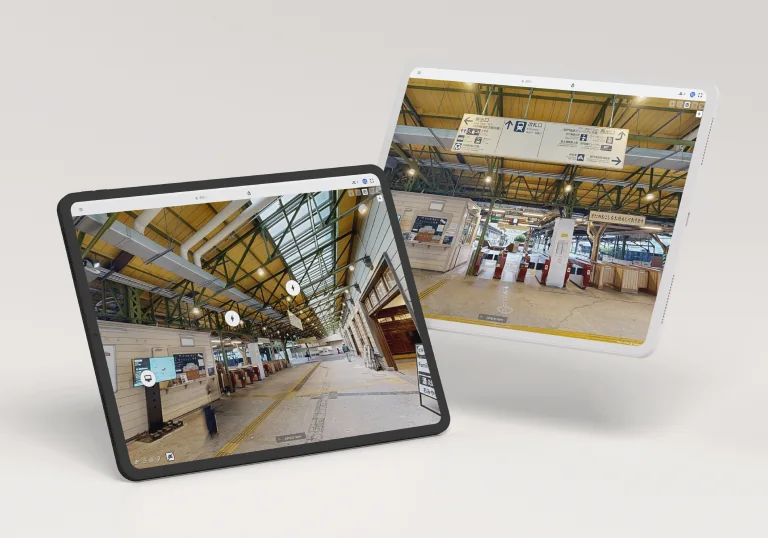
The foundation of the implementation was the creation of a digital twin of Mojikō Station – an interactive 3D model reflecting the real facility. Nohara technicians used a Matterport Pro camera to scan the interior of the passenger hall. The result was a photorealistic spatial model where architectural details were faithfully represented. This virtual model became the skeleton on which station information was overlaid.
Importantly, the digital twin served as a shared information platform – on its basis, data from all key technical systems of the facility were integrated. Project teams mapped every element of the infrastructure in 3D: from mechanical equipment, electrical systems and plumbing networks, to environmental sensors and building automation systems (BMS). In other words, the digital twin “encapsulated” full knowledge about the facility – every valve, cable, temperature sensor or security camera has its counterpart in the model, linked to appropriate technical data.
SIM-ON – Intelligent Platform for Facility Maintenance
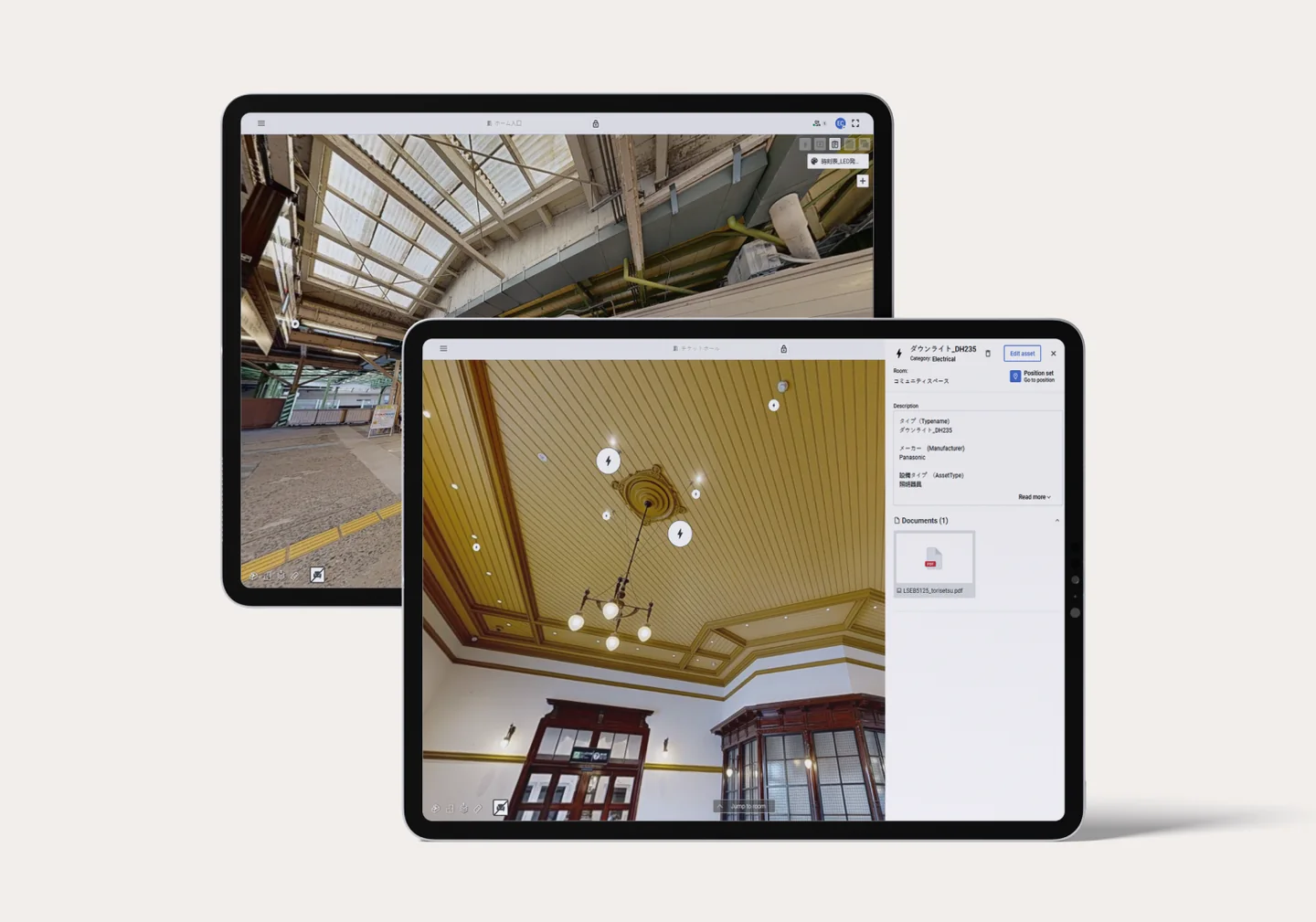
On top of this digital twin, the SIM-ON platform was implemented to support smart facility management, i.e., intelligent building operations. SIM-ON acts as a digital control center used by the station’s technical staff and administration.
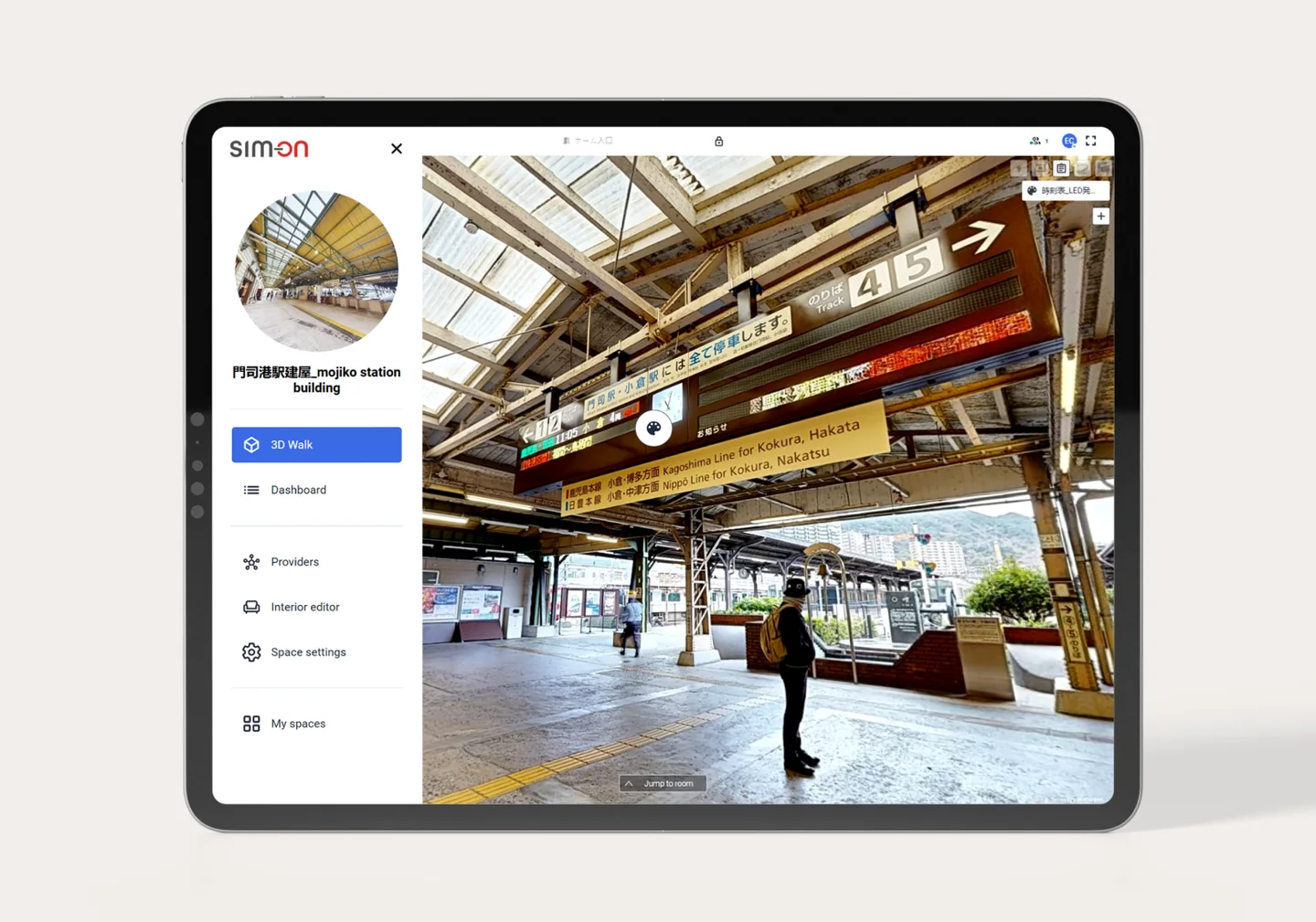
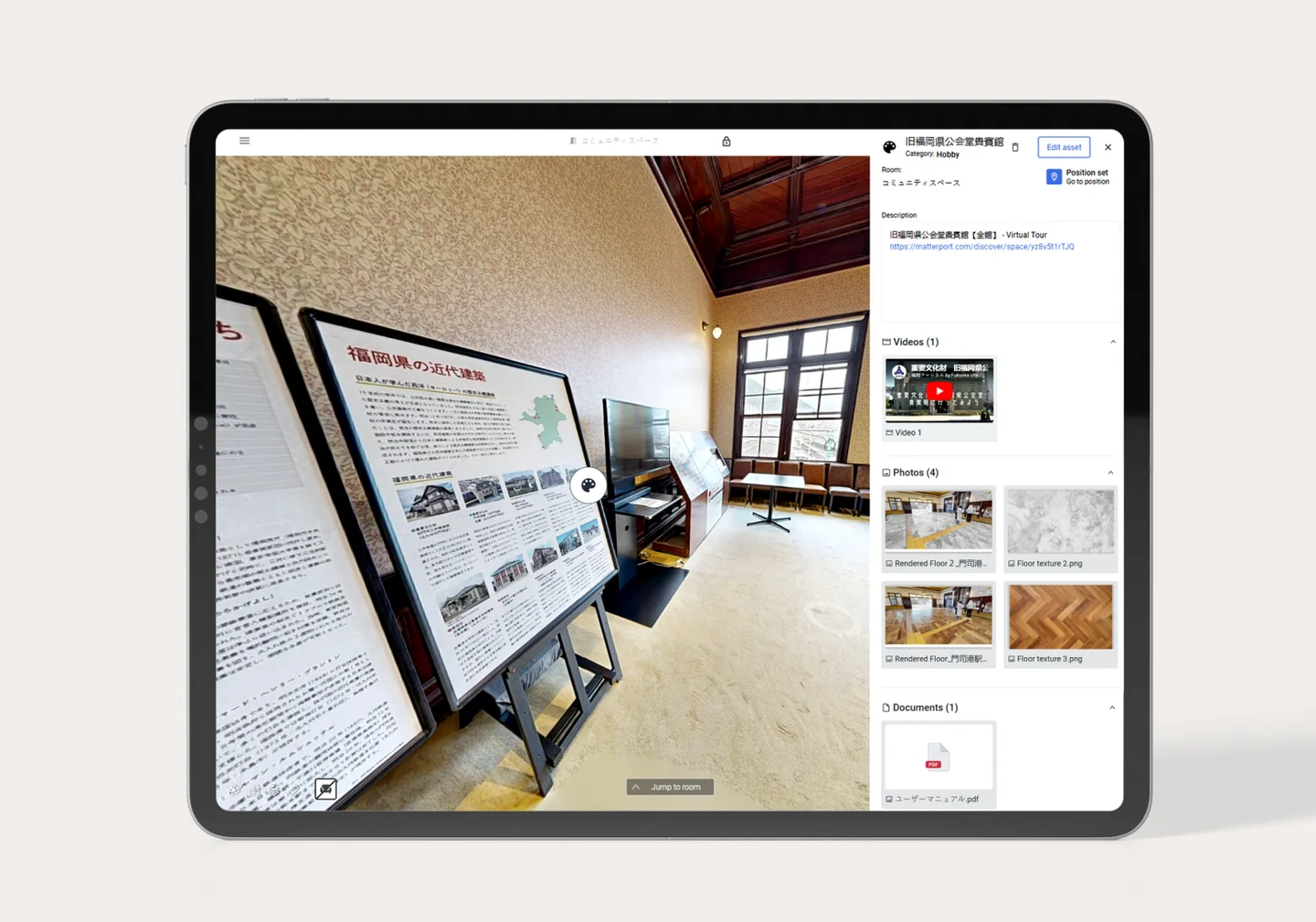
How does it work? Thanks to Matterport integration, operations personnel have access to a virtual three-dimensional view of the station on their computers or tablets. In this realistic 3D environment, they can navigate as if they were physically walking through the building. Clicking on a selected element (for example an elevator, an air-conditioning unit, or a lamp) displays a complete set of details: technical documentation, operating parameters, inspection dates, service history, warranty information, and more. All of this data, previously scattered across binders and Excel sheets, has been consolidated into one central repository tied to the 3D model.
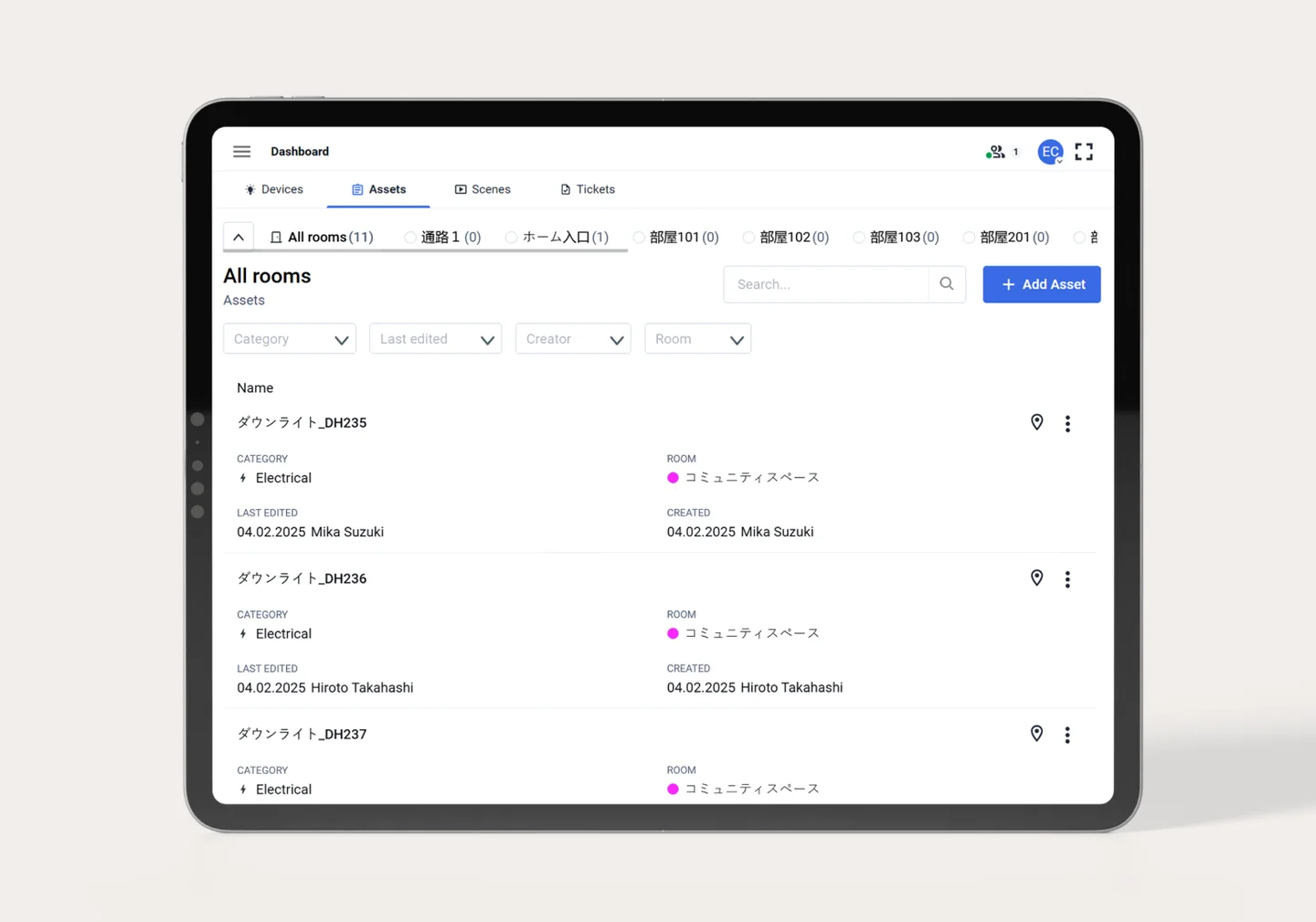
The SIM-ON platform also enables proactive maintenance. Based on inspection schedules and asset life cycles, the system generates reminders about upcoming service activities and automatically assigns tasks to the relevant departments or contractors. With the built-in Timeline/Task Manager, technical teams can plan maintenance work ahead of time and track its progress along a visual timeline. When a failure or incident occurs, staff can immediately log it in the system – SIM-ON assigns the event a location in the 3D model, which makes it possible to quickly locate the problem and assess the situation without lengthy on-site inspections.
IoT integration is another key element. In the pilot, a range of sensors installed at the station were connected to the platform – from energy meters and HVAC devices to temperature, humidity and motion sensors. SIM-ON aggregates this data in real time, which allows for continuous monitoring of conditions in the facility. If any parameter goes beyond defined limits (for example, a temperature increase in a server room or a drop in hydrant pressure), the system automatically alerts staff. This combination of digital twin and IoT creates a truly intelligent infrastructure – the building “tells” you when and where intervention is needed.
The implementation of SIM-ON also changed how work is documented and reported. Instead of filling out inspection reports by hand, technicians on site can enter notes and photos directly into the system using tablets or smartphones. Mobile access to the platform means field staff have all necessary information at hand – they can check on the screen which element requiring repair is located “behind the wall” next to them, view installation diagrams in its vicinity, and then mark the task as completed. Management gains a live overview of work progress and the facility’s technical condition, which significantly improves decision-making.
STAGES – Support for Renovation and New Construction
In parallel with SIM-ON, SIMLAB STAGES was implemented for use in investment, modernization and construction projects. While SIM-ON focuses on the operational phase, STAGES supports the earlier stages of the building lifecycle – from planning and design, through construction, to handover. Integrating these two tools gives JR the ability to monitor the entire “from project to operation” process as a continuous digital workflow.
In the pilot, STAGES was used to document and supervise potential renovation work at Mojikō Station. The station’s digital twin served as a base for comparing the existing condition of the building with future renovation plans. The platform makes it possible to overlay BIM data from the project – digital plans or design models – onto the current state of the station. This allows teams to visualize construction progress in the context of the 3D space. If JR decides, for example, to modernize interiors or technical installations at the station, STAGES will support the creation of a virtual construction logbook: subsequent 3D scans made during the work will show each stage of change. Project managers will be able to remotely check whether work is progressing according to schedule and design – without having to be on site all the time.
This approach has already been tested in other Nohara projects in Japan. For instance, during the modernization of a large hospital in Tokyo, 3D scans were taken every month, and the STAGES platform made it possible to overlay them onto the BIM model and other engineering data. As a result, hospital management could monitor critical areas before, during, and after renovation without physical visits. Moreover, STAGES served as a repository of information about built-in installations – Matterport cameras recorded the layout of cables, pipes and other elements before they were covered by walls or ceilings, creating a priceless reference for future operation.
JR plans to use STAGES in a similar way on its projects: each construction or renovation phase will be documented in 3D, enabling inspection of hidden works (such as reinforcement or installations before concrete pours) and ensuring full transparency of the process for all departments – from contractors and site supervisors to maintenance teams.
The STAGES platform also provides tools for coordination and communication during project execution. All issues, questions and changes can be spatially located in the model (for example, an engineer attaches a note to a specific place in the digital twin). This helps avoid many misunderstandings – instead of exchanging dozens of emails or drawings, design and construction teams have one shared picture of the situation. Thanks to STAGES, regular inspections, work acceptance and responses to construction incidents become more efficient, because all stakeholders are looking at the same, up-to-date source of truth.
Implementation Results – Time Savings, Better Information and Easier Communication
After several months of the Mojikō Station pilot, a number of measurable improvements from using SIMLAB’s platform were observed. Analyses of maintenance processes and system usage reports showed that the time needed to complete many tasks was drastically reduced. For example, preparing a full incident report (from reporting a problem, through inspection, to final documentation) used to take up to 12 hours – now it can be completed in about 6 hours. That’s almost 50% time savings, achieved by eliminating delays and redundant steps thanks to access to the digital twin. At an organization as large as JR, shortening procedures by 40% or more translates into tangible savings in costs and staff time.
There was also a significant improvement in information management. Previously, technical documentation, inspection records, installation diagrams and equipment lists were dispersed across different departments and systems – some existed only on paper, others in files on individual computers, and a lot of operational knowledge was held only in the minds of experienced employees.
After implementing SIM-ON, all data was digitized and linked to specific elements of the 3D model. JR staff noted that finding the right information now takes minutes instead of hours – the system’s search engine quickly filters resources, and intuitive 3D navigation lets users “walk” through the station model and access related documents. This reduced the risk of overlooking important data when making decisions.
What’s more, the digital asset database acts as an automatic as-built set: when a contractor finishes a construction project, they no longer have to compile separate volumes of as-built documentation for the maintenance department – all information about built-in elements is already in the system and is seamlessly handed over to operations. This is a big relief both for the investment department (which traditionally spent weeks assembling documents for handover) and for maintenance (which receives a consistent, structured data set instead of stacks of binders).
Communication between departments has also become simpler and more efficient. In the traditional model, coordinating between the design office, maintenance teams and on-site staff consumed a lot of time – it required meetings, site visits and many rounds of approvals, often repeating the same information. Now all parties use a single shared tool, which has reduced the number of misunderstandings and delays. When a technical issue arises, a field worker can immediately share its location and description in the system, and a manager sees it instantly on their screen – there is no need to pass information multiple times “down the line.”
Internal JR process analyses showed that so-called “non-productive work” (such as manually creating reports, gathering information from various sources or internal coordination) previously consumed as much as 50% of workers’ time. Thanks to SIMLAB’s platform, this share has significantly dropped – many reports are now generated partially automatically, data is readily available, and many consultations have been replaced by a shared real-time view in the cloud.
It is also worth emphasizing the improvement in quality and safety. The digital archive makes it easier to meet formal and audit requirements – all inspections, repairs and changes are carefully recorded in one system, ensuring full traceability of activities. Meanwhile, 3D visualization helps train new employees (it is easier to understand a complex installation layout by seeing it in a model than by reading a schematic) and to plan emergency scenarios – safety teams can simulate different situations (such as evacuation or deployment of firefighting equipment) on the digital twin and respond faster when real threats arise.
In summary, the SIMLAB platform has proven to be a game changer for JR’s pilot facility. Time savings, better information management and improved communication have all translated into more efficient and professional station operations. For infrastructure managers, it is now clear that digital twins are not a gimmick, but a practical tool that addresses everyday maintenance challenges.
Conclusions – Standardization Across the JR Network and Further Collaboration
The success of the Mojikō Station pilot paved the way for broader deployment of SIMLAB solutions within JR. It has shown that even such a historic and complex facility can gain a “second digital life”, and the benefits are undeniable. JR management now sees the potential to apply the same methodology on a larger scale – at more stations, and eventually across the entire network.
Standardizing the digital twin platform at hundreds of locations will unify procedures and data structures across all company branches. If every station has an up-to-date digital twin, JR headquarters will gain a holistic view of infrastructure condition in real time. This approach also supports benchmarking and continuous improvement – it becomes much easier to compare performance and maintenance costs between facilities when they all use the same system and data format.
The SIMLAB–Nohara–JR collaboration has many possible development paths ahead. Technologically, there are plans to enhance the platforms with new features tailored to railway needs. One area under consideration is integrating artificial intelligence algorithms to analyze sensor data – predicting failures before they happen (predictive maintenance) and optimizing energy use in facilities.
Huge amounts of data are already being collected (3D scans, IoT readings, schedules); the next step will be to leverage them intelligently – for example, to generate “what-if” scenarios for planned modernizations.
The SIM-ON platform can become an interface not only for technical operations, but also for other JR departments – for example, commercial (leasing retail space at stations, advertising) or passenger information (using 3D models in traveler apps). Meanwhile, STAGES has the potential to support large JR investment projects, such as building new lines or stations – continuous digital documentation of these projects will reduce paperwork for engineers and ensure that when a facility is handed over, all knowledge is already in the system, ready for use by maintenance teams.
Organizationally, the cooperation with Nohara has proven to be a model worth following – combining Polish technological expertise with Japanese innovation culture has resulted in a project that can become a benchmark for the entire sector. SIMLAB and Nohara are planning further joint initiatives to promote digital twin technology in construction and infrastructure management in Japan. For JR, this means access to cutting-edge global solutions and constant improvement of tools tailored to the specifics of rail operations.
In the near future, it is very possible that SIMLAB’s platform will be standardized across the entire JR network – from small local stations to major hubs – creating a unified, intelligent ecosystem for infrastructure management.
The project at Mojikō Station has proven that digital transformation is possible even in a traditionally conservative rail sector, and that its benefits will be felt not only by the railway company itself (efficiency, lower costs, better control), but also indirectly by passengers. Well-maintained, safe stations and infrastructure mean fewer disruptions, fewer failures and a higher travel comfort.
As a pioneer of this approach in Japan, JR can become a leader in digital twin standardization in the transport sector – setting the direction for other operators around the world. The conclusions from the pilot are clear: the joint efforts of SIMLAB and Nohara have delivered JR a tool that connects the past with the future – a station from the early 20th century now has a modern, intelligent management system suitable for the 21st century.
Now it is time for this digital revolution to reach more facilities and open the door to even closer collaboration on future challenges. JR and its partners are already looking ahead, planning new deployments and improvements – the digital journey has only just begun.