
Building data and IoT in spatial context
Connect selected building systems, IoT data, and automation workflows to the digital twin so teams can understand data where it belongs - inside the building.
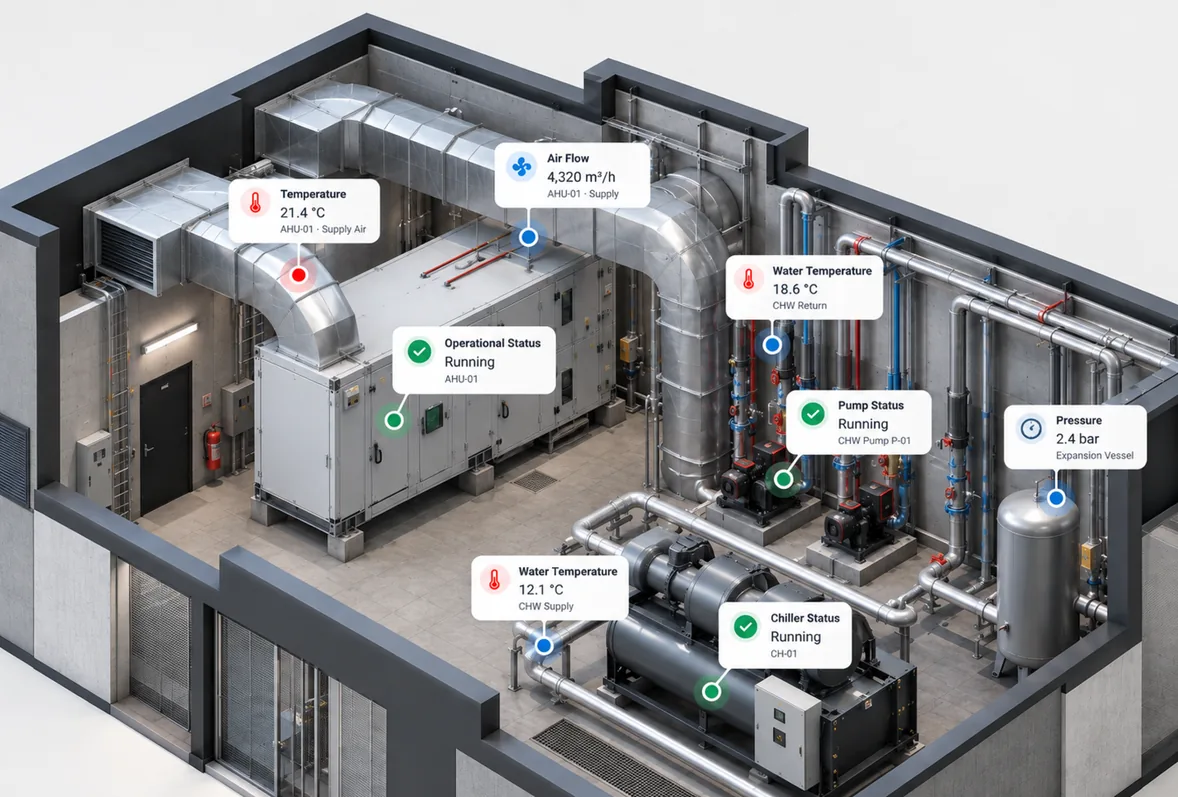
Building data is often disconnected from physical context
Sensor, device, automation, and building system data becomes far more useful when teams understand exactly where it exists and which physical asset or space it relates to.
System data can be abstract
Dashboards and device lists describe the building in rows and IDs. Without a spatial reference, readings are hard to connect to the rooms and equipment they describe.
Devices are difficult to interpret without location
A sensor alert means little until someone knows exactly where the device sits, what it monitors, and which assets or spaces sit around it.
Teams switch between interfaces
Building management systems, IoT platforms, and asset registers each live in their own tool, so answering one question often means opening three applications.
Operational context is lost
When device data is separated from asset history, documentation, and floor plans, teams lose the context they need to act quickly and confidently.
Connect data to place
A simple chain turns raw device data into operational understanding: every reading is anchored to a location, related to an asset, and put to work in a daily workflow.
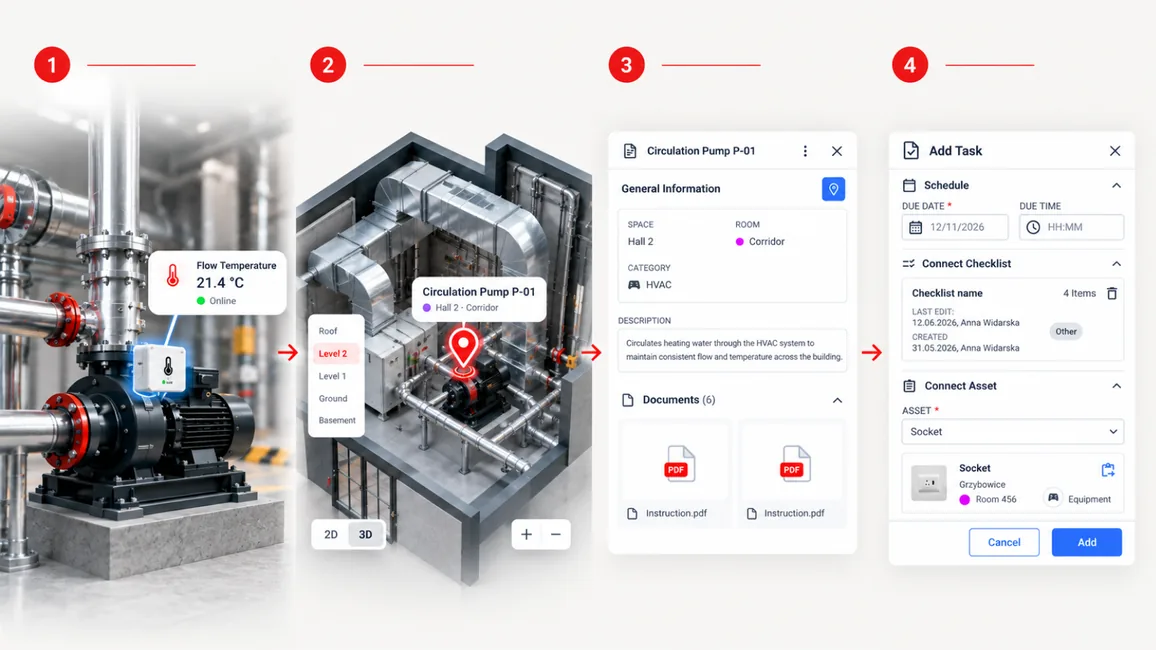
Connect device or system
Bring selected building systems and IoT data sources into the SIMLAB environment, starting with the systems that matter most to your operation.
Anchor it to spatial location
Place each device or data point at its position inside the digital twin, so readings are always tied to a specific room, floor, or zone.
Link it to asset context
Relate devices to the assets they monitor or control, alongside documentation, service history, and notes that live on those assets.
Support operational workflow
Give facility and operations teams one spatial view where device data, assets, and daily tasks come together to support decisions.
IoT and automation use cases
From single-site facility teams to smart building programs, spatial context makes operational data easier to read, share, and act on.
Equipment status in spatial context
See the status of monitored equipment where it actually sits in the building, instead of scanning a flat list of device names.
Smart building visibility
Give smart building teams a spatial layer that helps them present and explore building data in a way stakeholders immediately understand.
Device and asset relationship
Understand which devices relate to which assets, so sensor data, asset records, and documentation stay connected in one place.
Facility operations support
Help technicians locate devices, review nearby assets, and capture notes during daily rounds, inspections, and maintenance work.
Partner system integration
Work with SIMLAB and its partners to connect the platforms your teams already rely on, where approved, so spatial context extends across your stack.
Built to work alongside your existing systems
SIMLAB is not a replacement for your building management or enterprise platforms. Where approved, SIMLAB can support integrations with the tools your teams already use, adding a spatial layer on top of the systems that run your operation.
Integration availability depends on your environment and approvals. We scope each connection together with your IT and OT stakeholders.
The spatial layer for daily operations
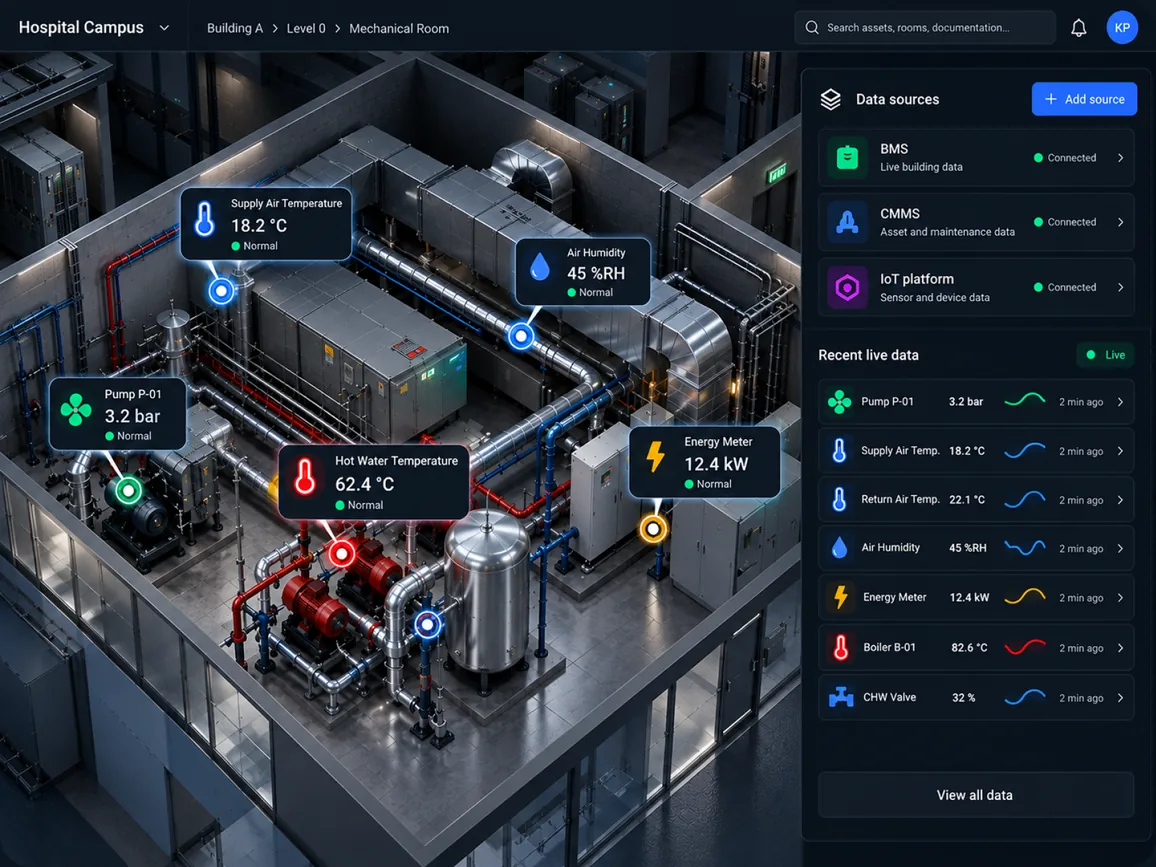
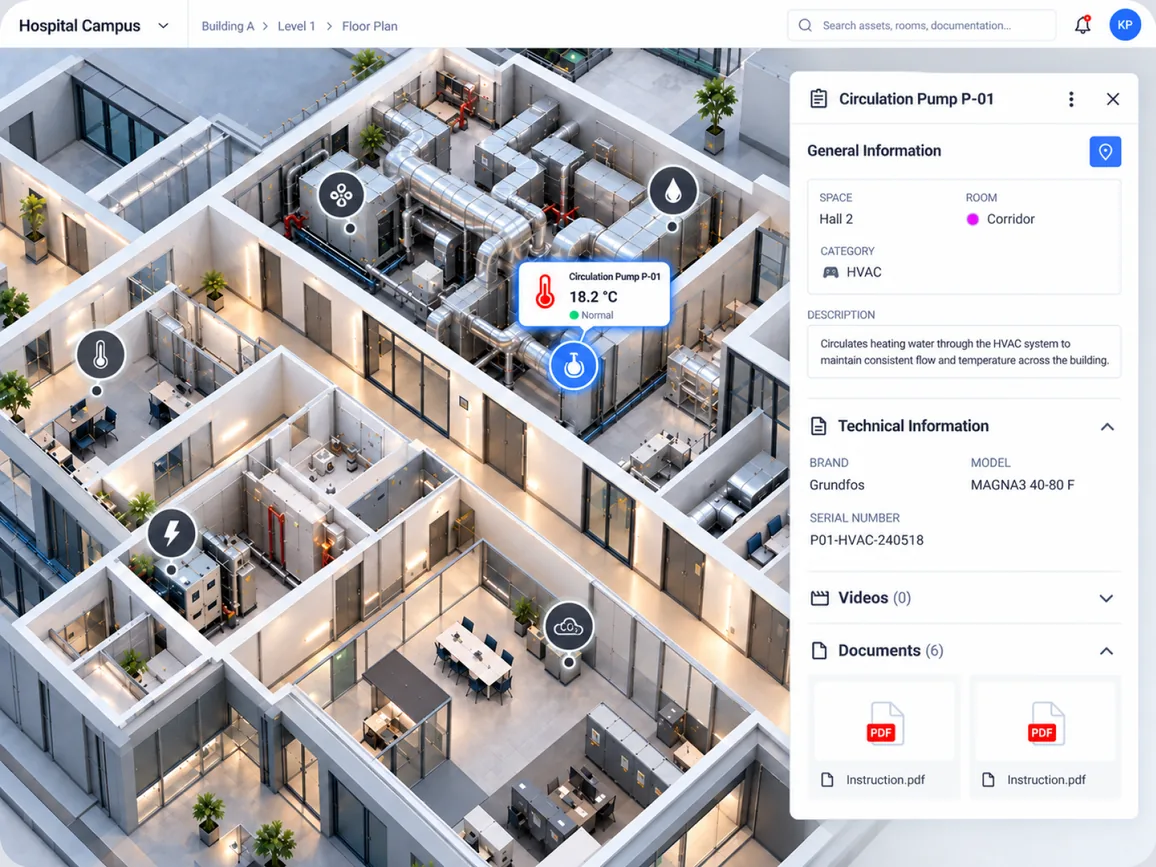
IoT and building data live inside SIM-ON, SIMLAB's spatial and operational layer. Facility management, asset records, device data, and daily operations are organized around the building itself, so context is never more than a click away.
- Devices and readings shown at their location in the twin
- Asset records, documentation, and notes linked to each device
- One environment shared by facility, operations, and technology teams
Clear about what this is, and what it is not
SIMLAB presents building and device data in spatial context to support day-to-day operational work. It is not an emergency response or life safety system, and we do not make guaranteed automation claims. Automation workflows remain in the hands of the teams and systems responsible for them - SIMLAB supports those teams with location, asset, and documentation context.
Discuss building data in spatial context
Tell us which systems and devices matter to your operation, and we will walk you through how they can live inside the digital twin.