Case study5 min read
SIM-ON on Campus: How a Digital Twin Speeds Up Work and Streamlines Facilities (Case: Toyo University)
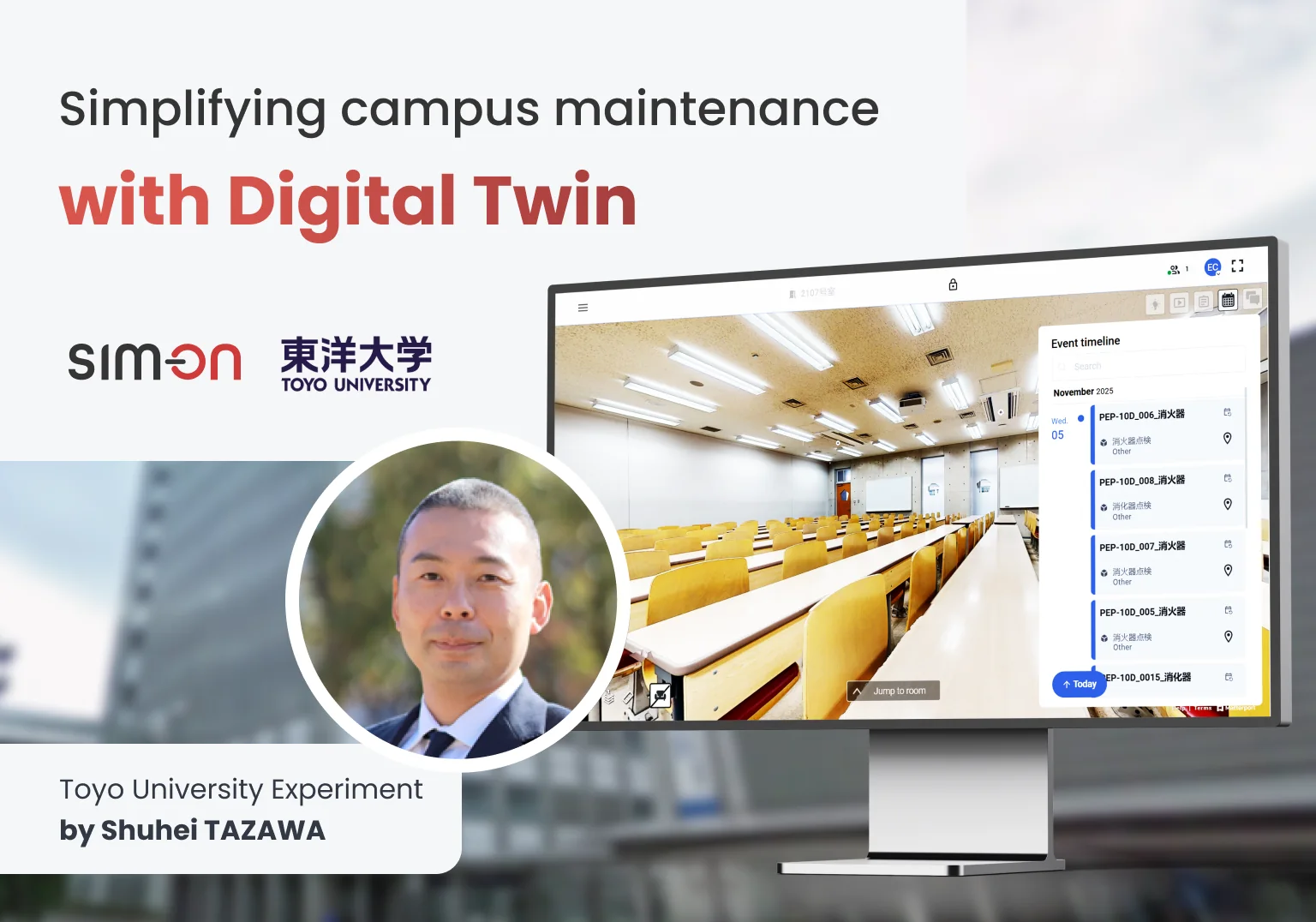
Paper archives, scattered PDFs, and multiple unconnected systems (CMMS/BMS) are everyday reality for many universities. Toyo University tested a different approach: a 3D spatial interface built on Matterport Digital Twin and SIM-ON, where documents, manuals, event history, and tasks are accessible straight from the building’s map. The result? Far shorter time to information, fewer communication errors, and a complete work history in one place.
Table of Contents
What you’ll learn in this article:
- Introduction – the digital transformation of campuses
- SIM-ON – a spatial building management system
- The experiment at Toyo University
- Results and takeaways
- Why this matters for the future of higher ed
- Wrap-up – the Toyo lesson + CTA
What you’ll learn in this article
- Starting problem: paper + 2D drawings + scattered files = long search times and high error risk when staff turns over.
- Solution: SIM-ON as a “GPS for maintenance” — click an object in the 3D model to instantly open the correct manuals, history, photos, service plan, and IoT/BMS data.
- Toyo – test results: HVAC outage: −55% labor time (from 5h 50m down to 2h 36m), Searching maintenance history: −92% time (from 11m 52s down to 56s).
- Additionally: timeline visualization of planned work, ticketing with task assignments, and consistent cross-department communication.
Introduction – the digital transformation of campuses
University facilities teams wrestle with fragmented documentation and tools. Toyo states it plainly: paper-based maintenance anchored in 2D drawings slows work down because information isn’t consolidated and is hard to find during inspections or repairs.
At Toyo University, an experiment led by Professor Shuhei Tazawa (School of Architecture) set out to test whether a spatial management interface built on a Matterport scan and SIM-ON can truly reduce time and bring order to FM (Facility Management) processes.
SIM-ON – a spatial building management system
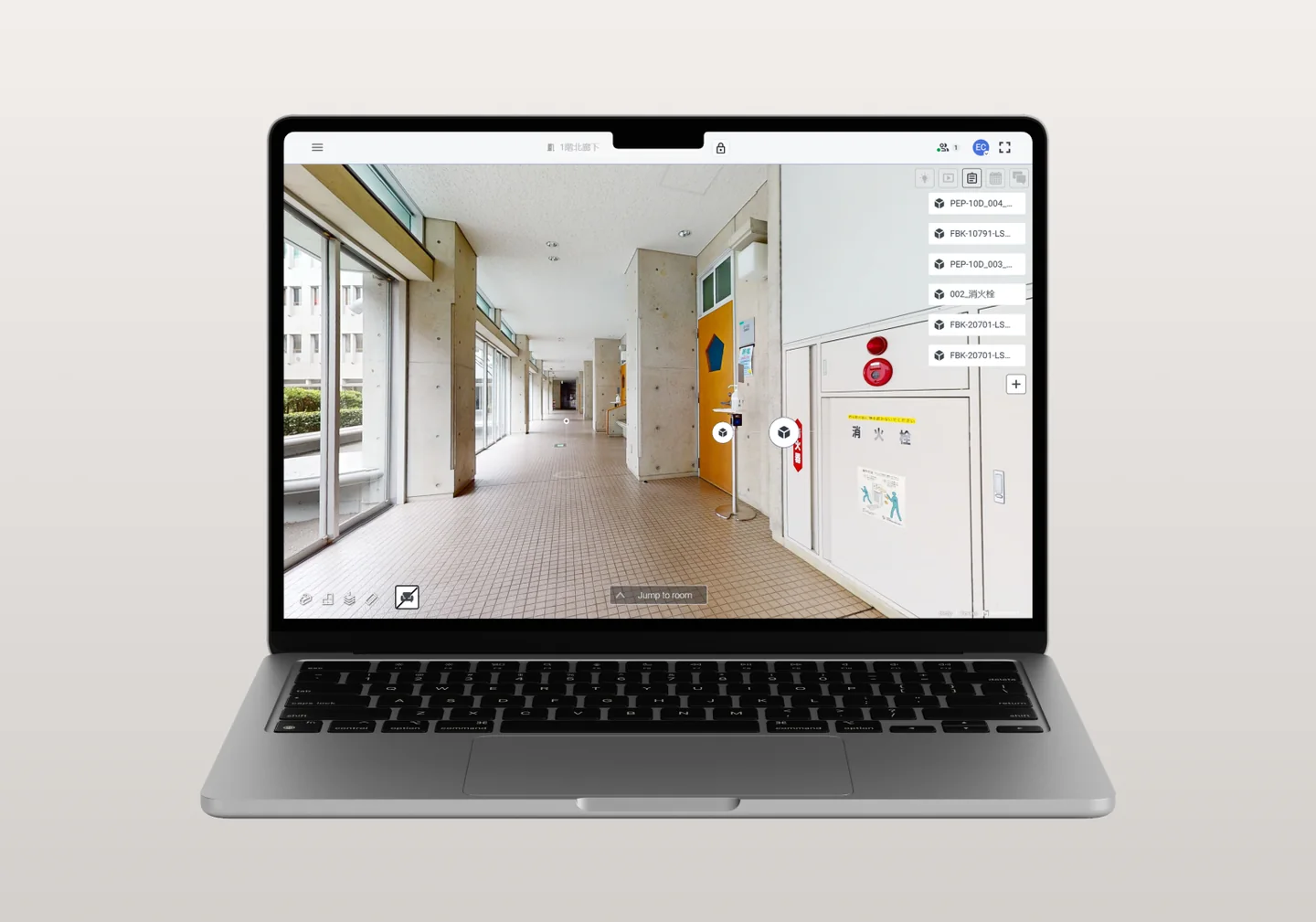
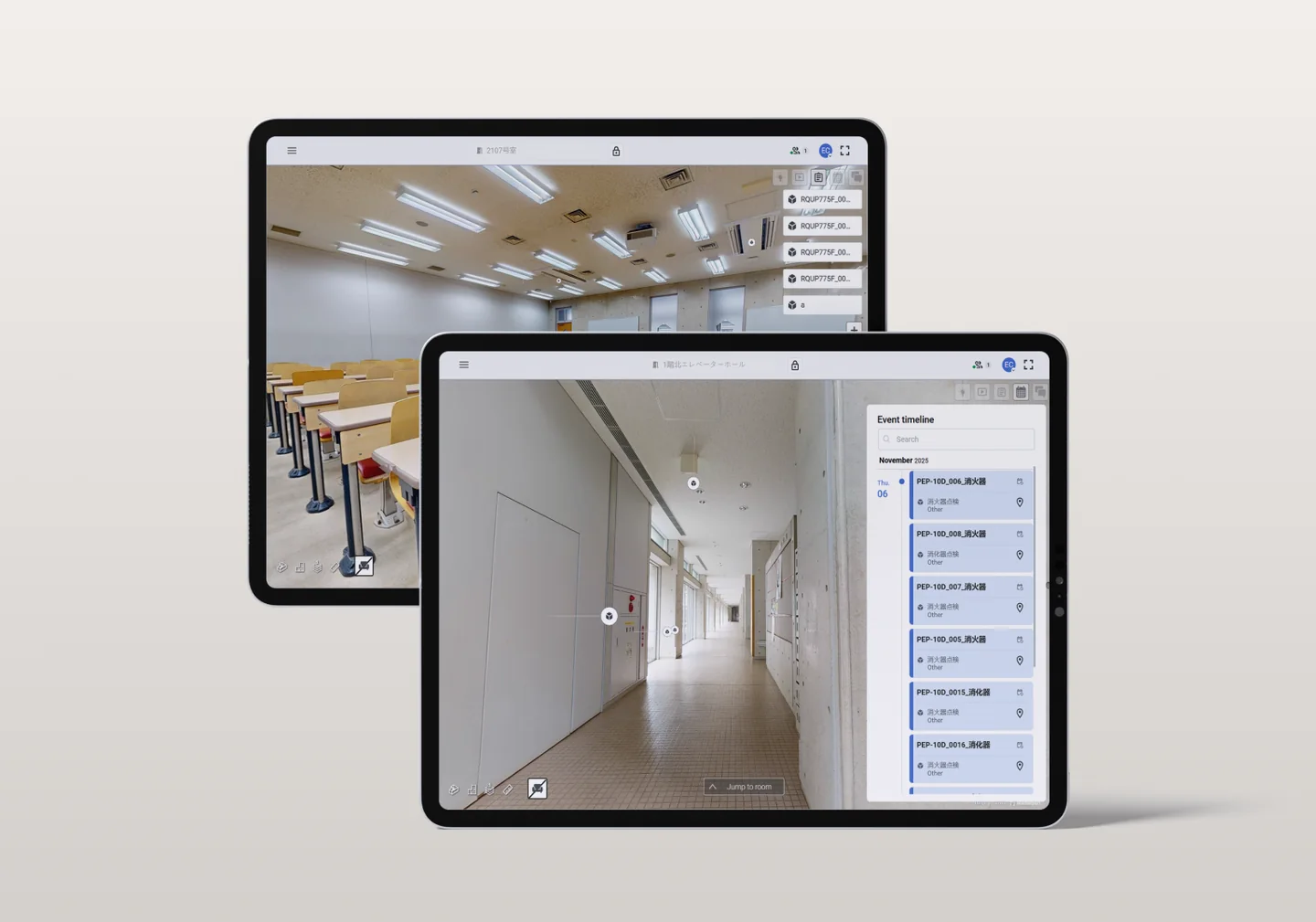
SIM-ON brings together a 3D model (captured with Matterport), technical and service documentation, IoT/BMS data, and the maintenance workflow. Instead of hunting for a filename, you click the device inside the model and immediately see: the manual, wiring or piping diagram, as-built photos, the history of tickets, and upcoming inspections.
At Toyo, 112 assets were tagged (fire extinguishers, hydrants, HVAC equipment, emergency lighting, fire doors, speakers, etc.). Each had linked PDFs, images, videos, alarms, and inspection schedules — all available in place on the virtual object.
Just as important, SIM-ON supports ticketing (tasks, assignees, priorities, statuses) and a timeline of events, making it easy to track what happened, when, and who did it.
The experiment at Toyo University
Scope. A building was selected, a Matterport Pro2 scan was captured, and a 3D model was created. Operational data was added to the model, and items subject to mandatory inspections were exported to COBie, building a consistent as-built with an inspection layer.
Two work methods were compared:
- Traditional: paper + 2D drawings + network folders of PDFs + separate CMMS/BMS,
- Digital: SIM-ON — working directly from the 3D model with timeline and ticketing.
Measured FM activities included: finding instructions/plans, logging a fault, assigning a task to a technician, and updating status. The team also ran a simulated HVAC failure and a speed test for accessing maintenance history and schedules.
Results and takeaways from the experiment
1) HVAC outage — faster path to diagnosis and restoration.
- Traditional method: 5h 50m,
- Digital Twin (SIM-ON): 2h 36m → ~55% less labor time. Time dropped because specs and device history were accessed directly from the model, and communication happened in a single stream (photos, notes, statuses).
2) Maintenance history & schedules — seconds, not minutes.
- Traditional method: 11m 52s,
- Digital Twin: 0m 56s → ~92% less time. The key was eliminating the “translation” step from room numbers and inventory codes to folder paths — clicking the object opened the right records immediately.
3) Clearer communication and accountability. One 3D model + timeline + ticketing kept the team aligned and cut down disputes about “the right file version.” Handoffs between shifts and activity audits were simpler because everything was described in the context of place.
4) Organizational takeaways and ROI. The experiment underscored that organizational change matters as much as tech: long-standing habits among service vendors can hinder centralizing knowledge with the owner. SIM-ON lets the owner truly master the building’s geometry and inspection lists, which leads to better returns and lower costs in proactive FM.
Why this matters for the future of universities
Learning on a living campus model. A Digital Twin isn’t only an ops tool; it’s also a teaching platform. Architecture, construction, and engineering students can study real installations, simulate scenarios, and design optimizations on a functioning site.
Integrations and ecosystem. SIM-ON monitors IoT/BMS endpoints (e.g., KNX, NETxAutomation) and integrates with EAM/CMMS platforms (e.g., IBM Maximo), creating a single, spatial interface for technical, service, and operational data. In the experiment, the existing building automation system was connected to SIM-ON with a successful read of selected KNX sensors — confirming the platform’s readiness for broader use.
ESG and energy efficiency. Less paper means a smaller environmental footprint, and sensor data viewed in spatial context helps detect energy anomalies faster and improve occupant comfort. These directions align with the move toward centralized information and tighter control over inspection items.
Wrap-up – the Toyo lesson + CTA
Toyo’s case confirms it: a Digital Twin is an operational tool, not just a “pretty model.” Combined with SIM-ON, it shortens response times, dramatically speeds up document search, streamlines communication, and builds one shared source of truth — from the initial ticket to the final report. The biggest shift is the way of working: from “hunting through folders” to clicking the object in 3D.
- Book a SIM-ON demo — see how “map-first” work gets you from ticket to task fast.
- Ask about integrations (IoT/BMS: KNX, NETxAutomation; EAM/CMMS: IBM Maximo).
- Start a one-building pilot — we’ll create your digital twin, connect documentation, and launch core maintenance scenarios.